
For everything there is a season, and a time for every matter under heaven…a time to keep silence and a time to speak. (Ecclesiastes, 3:1,7)
Years ago, when my now grown sons were children, I took them on a homeschool field trip in the Fall to a Civil War historic site. There was a walking trail with multiple stops along the way where you could read about what took place during the battle.
We made our way together along the trail and they took turns reading to us about the events of the battle and we would stare for a moment and try to imagine what it may have looked like before we moved on.
When we climbed a hill I noticed something in the trees and directed my sons to sit down on a bench conveniently placed in front of what I hoped they would see a short distance away.
We sat and I said nothing and, as young boys do, they quickly grew bored and wanted to move on. I asked them to be still and be silent and just watch.
A moment later, my oldest son gasped and pointed through the trees. His brothers were soon gasping and pointing as well as a tree that looked like it was covered in golden leaves suddenly came to life as hundreds of Monarch butterflies spread their wings and began to fly away from its branches leaving them nearly barren. It was truly a beautiful sight and one I will probably never see again.
That sight is what my boys talked about the most over the next day or two. But we all would have missed it if we had not been silent and still.
About this time last year, a friend and I visited a Makoto Fujimura exhibit just a couple of hours from where I live. My favorite piece was one called “Silence” inspired by the novel of the same title by Shusako Endo. The picture below does not begin to do it justice.
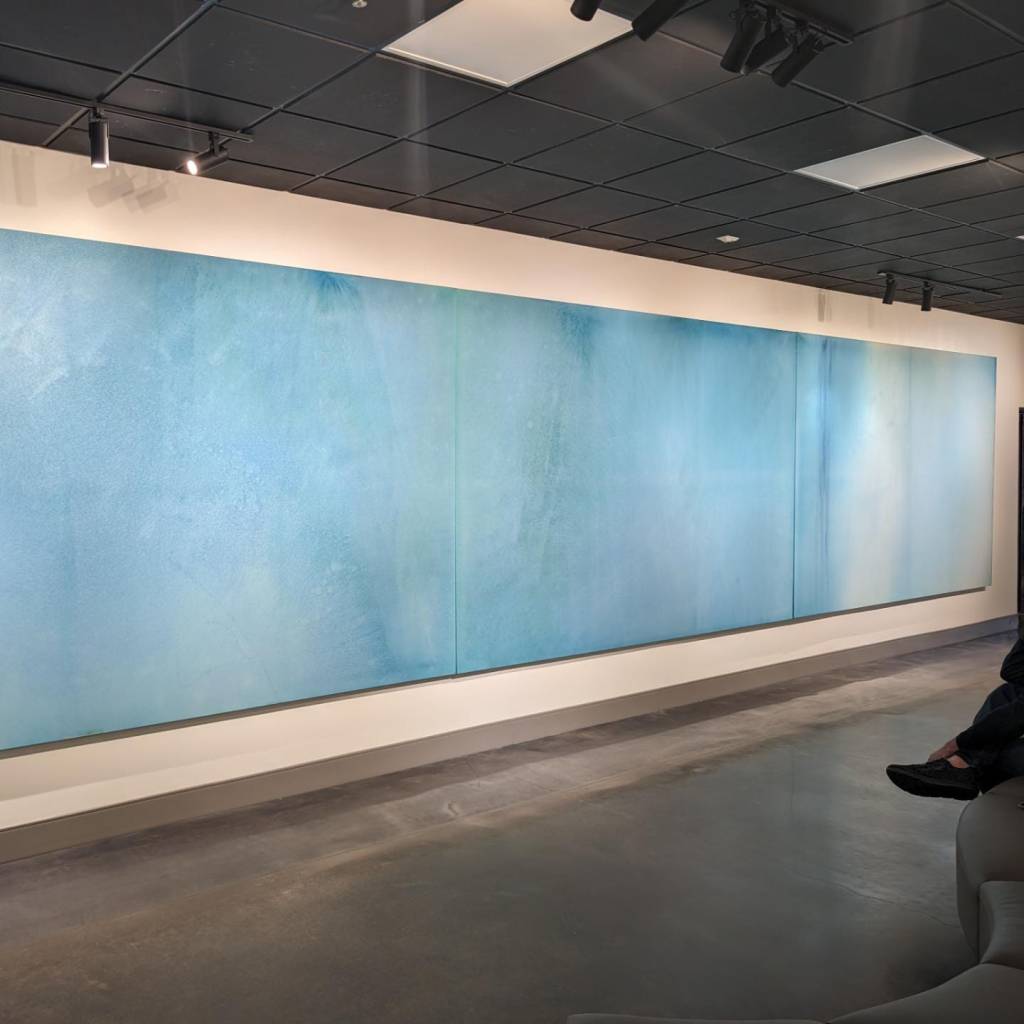
We were invited to sit in front of the massive work of art in silence to enjoy it. I have extreme hearing loss so I turned off both of my hearing aids, which reduces me to only 25% of my hearing, and sat in literal silence before that painting.
At first my mind was racing with images I thought I saw and patterns and meaning and then I tried to quiet all of that and just sort of let the beauty of it wash over me. I didn’t try to empty my mind or anything, I just tried to notice and be aware and let the thoughts come without trying to force them.
I am thankful to God for that experience. For BOTH of these experiences. They are a reminder to me that there is a time for silence. There is a time to be still and quiet and open to whatever God wants to do in that moment, even if he is silent himself.
I think we all know there is “a time to speak” but I think we forget that there is also “a time to keep silence.”
But we live in a culture that majors in distraction and noise. It’s everywhere we look. It’s loaded into the device in our hands that is now essentially an extension of our bodies.
Life has been so hectic lately, so stressful, with so many things to do and places to be and things to pay for and goals to achieve and projects to complete. I feel overwhelmed.
Do you?
What I long for is some silence. To just sit with God in a quiet place and see what he will say. Or just sit with God in a quiet place and know I am beloved even when he says nothing.
Why is that so hard for us to do? And I don’t mean finding time to do it, I mean the act itself is hard.
When was the last time you tried to just sit in complete silence for a while?
But what are we missing by chasing and saturating ourselves with noise?

 Joseph McBee