
Is love a fancy, or a feeling? No.
It is immortal as immaculate Truth... - Hartley Coleridge
Emma Thompson, Alan Rickman, Kate Winslet and Hugh Grant star in this captivating romantic story based on Jane Austen’s classic novel, Sense and Sensibility. It tells of the Dashwood sisters, sensible Elinor (Thompson) and passionate Marianne (Winslet), whose chances at marriage in a society where women are not allowed to earn their own living seem doomed by their family’s sudden loss of fortune.

***WARNING! This review contains spoilers.***
I shed tears every time I watch this film. It’s beautifully shot and masterfully performed and there are scenes of such incredible depth and power you cannot help but be moved by it all.
I am always impressed by the opening scenes. Thompson, who not only stared in the movie, but also wrote the screenplay, does a wonderful job of showing us the true nature of every character within seconds of their first appearance on the screen. It is a master class in writing.
The characters produce such strong feelings as you watch their actions and interactions. Fear, anger, disgust, love, pity, and contempt are all experienced. I love it when that happens and I think it’s important when that happens to ask ourselves why we are experiencing those feelings. The actors’ performances and the writing and directing and everything that goes into crafting the scene speaks to us on a deep level. It touches something in our souls and that is worthy of consideration.
To me, this movie is about love and suffering and how often those two coincide. And it begins with the very first scene as the rich Mister Dashwood lays dying in his bed, worrying about his second wife and daughters, making his son promise to help them. His love for them fills him with fear for their future and compels him to try and secure it through his son, who is too easily manipulated by his greedy wife, Fanny.
There is too much going on in this movie to do any kind of a “scene-by-scene” review, but there are some highlights that always stand out to me and that carry the strongest messages.

Highlight 1
When Fanny’s brother, Edward (Hugh Grant) visits the estate he is the exact opposite of his awful sister. He is kind and funny and gentle. This is one of those brilliant scenes I mentioned that tells you everything you need to know about a character in just moments.
Fanny has asked that the youngest Dashwood girl, Margaret, give up her room for her brother Edward during his visit because her views overlook the lake. When Edward arrives, Marianne, in a not-so-subtle jab asks Edward how he likes his view.
Edward says he likes it very much and then comments to Mrs. Dashwood that her stables are beautiful and handsomely kept. When Fanny is surprised and says that his room overlooks the lake. Edward replies, “An oversight, Fanny. I was mistakenly led to one of the family rooms. But you will be gratified to know that I have corrected the situation and am now happily installed in the guest quarters.”
Kindness and honor. And it is immediately evident in the choices he made. A choice, I would add, that he had no intention of even mentioning had he not been directly asked. Edward’s is a quiet dignity.
Highlight 2

The Dashwood’s are forced to move to the country where they take up residence in a cottage owned by a cousin, Sir John Middleton (delightfully played by Robert Hardy). It is in the country that they meet Colonel Brandon (Alan Rickman).
For me, Brandon is a Cinematic Saint. He is a character that displays so many beautiful characteristics of Christlikeness. He is immediately taken with Marianne, who has no interest in him because he seems to old and reserved.
Brandon continually moves toward Marianne with love but without agenda or demands. He loves in the face of her rejection, her contempt, and her rudeness.
Marianne has no interest in the good man. She is looking for someone who matches her passion, which she assumes the Colonel does not have because he keeps his emotions in check so, as she does with her sister Elinor, Marianne assumes Brandon’s emotions to be shallow.
On a walk through the countryside, Marianne is caught in a rainstorm and twists her ankle. A dashing young man, John Willoughby (Greg Wise) comes to her rescue and appears to Marianne like one of the great heroes from the romantic stories and poetry she devours. Willoughby carries her back to the cottage and promises to visit her.
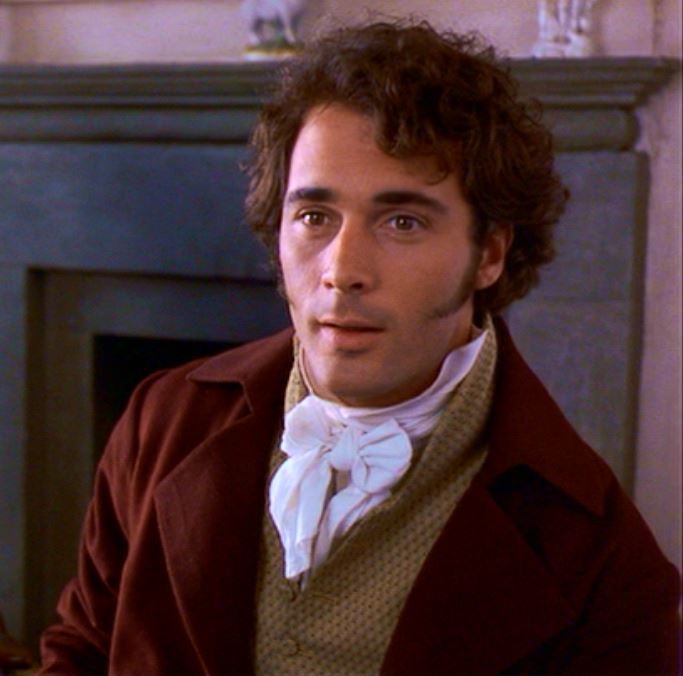
Willoughby is everything Marianne wants and nothing that she truly needs. As their romance develops, he exposes Marianne to rumor in the small village with the liberties he takes with her and acts as a bad influence on her. He consumes her affection and attention, while giving nothing in return. He makes no commitments, no true expressions of love, but always leaves it assumed.
Colonel Brandon watches the romance with deep pain and yet wants Marianne to be happy believing that she is completely innocent and that any rumors that may be flying about are untrue.
Highlight 3
Marianne is eventually rejected by Willoughby because it is discovered that he has impregnated a woman and then left her alone to deal with the pregnancy. He was cut off by his rich relatives when they found out, and therefore had to find a rich woman to marry. That would not be Marianne.
The woman happens to be the daughter of a woman Brandon loved as younger man, but whom he was torn away from because the woman was poor and Brandon was forbidden to marry her. Brandon discovers what Willoughby has done, but does not mention it at all until AFTER Marianne is rejected and left heart broken.
He then tells Elinor the news in the sincere hope that it will ease Marianne’s suffering. He also tells Elinor that he believed Willoughby did love Marianne but could not marry her because of his financial situation.
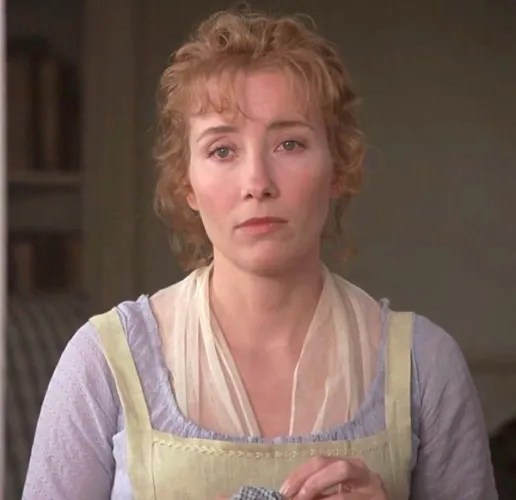
When Elinor tells Marianne she assures her that Willoughby did in fact love her. Marianne says, “But not enough.” Her romantic notions of passionate love are dashed.
Highlight 4
Brandon also offers Edward, again through Elinor, a parish at his estate. Edward had a secret engagement and when his mother finds out, she cuts him off without a penny.
When Edward finds out about the offer, he is astonished that Brandon, a man he doesn’t know, would do something like that for him. He says that Brandon “must be a man of great worth and respectability.” But this description does not do the the Colonel justice so Elinor replies, “He is the kindest and best of men.”
What a powerful comparison. The world sees Brandon as rich and respectable. Those who know him, see him as kind and good.
Highlight 5
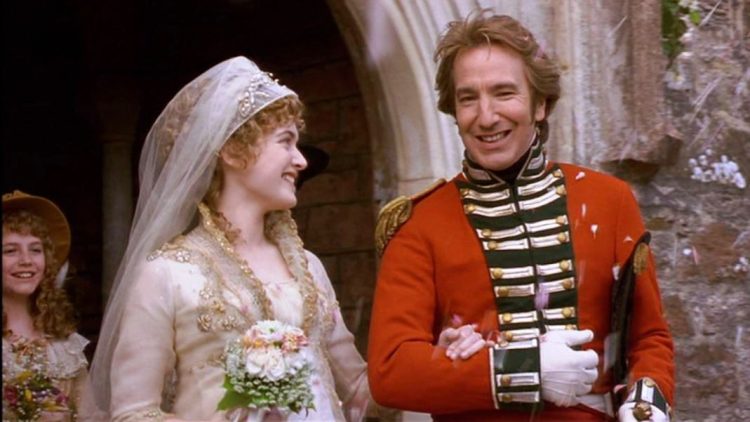
Later, when Marianne becomes horribly ill and nearly dies, it is the Colonel who comes to her rescue. Instead of carrying her back like a dashing hero, he carries her and falls to his knees with her in his arms. His strength is spent for the one he loves.
As Marianne suffers in her illness, Brandon suffers outside her room, pacing and grieving. When he asks Elinor what he can do to help, she at first tells him there is nothing to be done. He says, “Give me an occupation or I shall run mad.” When she tells him that Marianne would rest easier if her mother were with her. Brandon is ignited with a sense of purpose and leaves at once to bring Mrs. Dashwood to her daughter.
Highlight 6
In the end, there is joy.
Those who have suffered leave their suffering and enter a season of joy in their lives and that joy is shared with others. There is a beautiful scene when Brandon is reading to Marianne as she recovers from her illness and she does not want him to leave her.
There is another beautiful scene when Edward is finally free to confess his love for Elinor and ask her to marry him and she is freed to confess her love for him.
It is only Willoughby, the one who was interested in only himself, the one who gave into every indulgence, who avoided all sacrifice, who was unwilling to suffer, who would cause the suffering of others if it meant shielding himself from it, only him who ends up alone and without love.
Why I Recommend It
There is so much to enjoy in this film and to think about. As I mentioned, it inspires some powerful emotions and those are worth exploring. But it is also just a truly excellent movie and it can be enjoyed as a work of art.
The messages in this film are powerful and varied, but there are the constant themes of love, sacrifice, suffering, dignity, and honor that will cause you to question how you love the people in your life.
There is a call to selflessness and kindness in this film. There is a call to sacrifice your own comfort for the sake of others.
In short, this film inspires us to be our best selves in the way we connect and relate to others. It inspires us to love without agenda and without selfishness and even in the face of rejection and suffering. It calls us to love even when the object of our love may never know or return it.
Questions for Reflection and Discussion
- What is good, true, and beautiful in this film?
- As Christians, what can we Receive in this film? What can be Redeemed? What must we Reject?
- Read 1 Corinthians 13. What examples of this kind of love do you see in this film?
- How do suffering and love often go hand-in-hand?
- What emotions does this film stir in you? What do you think those feelings are telling you?
- What inspires you in this film? What calls to you? How will you respond?
- Where do you see echoes and shadows of God’s love for us in this film?
Next Time: Pan’s Labyrinth
















 Joseph McBee