
I pray, O God, pour out upon me your Holy Spirit–the Spit of prayer–that I may ever love and desire to pray; being daily free to approach you, with all confidence in the name of my Lord Jesus Christ; to bow before you in every time of need, as a child well beloved, O most beloved Father, you who are really a Father unto all your children in heaven and on earth. Grant that I may always lift up unto you holy hands, without fear or doubt, and in full assurance that all my prayers and sighs which come from the heart, are truly heard. Grant also that when my help delays I shall be patient, not dictating to you either time or measure, but to wait and abide your own good time; for you have pleasure in them that fear and put their trust in your mercy. Finally, O God, rule and frequently meditate upon the hour of my death and be momentarily prepared, while I pray sincerely for a blessed departure hence. Amen.
William Locke
Author: Joseph McBee
Don’t Let Offense Make You Deaf
Over twenty years ago I lost a friendship because someone spoke the truth to me and it made me angry.
I was angry because my desire to go into vocational ministry was not manifesting in my life and I was basically griping about it.
My friend, who was, and still is, a full-time vocational minister said, “You know, maybe no one will ever call you pastor…”
That was all I heard. I am sure he went on to say some encouraging and loving things because that’s the kind of guy he has always been but I didn’t hear anything he said.
I was too offended.
My friend wasn’t unkind, rude, or cruel. He was honest. In fact, what he said was the most loving thing he could have said at that time and it turns out, he was absolutely right.
The problem was that my offense made me deaf to his encouragement.
I cut him out of my life for a while. I’m not proud of that.
When I realized that I was carrying bitterness in my heart against him I asked to meet him for lunch and asked him to forgive me.
As a brother in Christ, he did and there was reconciliation between us of a sort. But it was never really the same.
When something someone does or says touches a place of deep pain in us, we recoil and maybe even lash out.
“That hurts!!”
The mature and wise thing to do is to question those overreactions. To dig a little deeper. When our reaction is out of proportion, it is a signal. Something deeper is being touched, and it deserves our attention
I was not mature enough at the time to do that. I am trying to be now.
Don’t let offense make you deaf. Don’t let it harden you against the men who care enough to speak with honesty. A true brother tells you the truth in love. When it touches a place of pain, press in. Do not retreat.
From the Commonplace Book: Reading as a Discipline
“Reading takes time. You have to make it a non-negotiable part of the day.
This precious time must be guarded! Some thinkers, as they rise in prominence as a result of their interesting ideas, gradually devote less time to reading and more time to lucrative opportunities.
This is a mistake. They are neglecting one of the core habits that made them so interesting in the first place.
Similar to a gym routine, it must be built right into your schedule and must become an unthinking custom.”
– Rob Henderson
Blessed Silence
For everything there is a season, and a time for every matter under heaven…a time to keep silence and a time to speak. (Ecclesiastes, 3:1,7)
Years ago, when my now grown sons were children, I took them on a homeschool field trip in the Fall to a Civil War historic site. There was a walking trail with multiple stops along the way where you could read about what took place during the battle.
We made our way together along the trail and they took turns reading to us about the events of the battle and we would stare for a moment and try to imagine what it may have looked like before we moved on.
When we climbed a hill I noticed something in the trees and directed my sons to sit down on a bench conveniently placed in front of what I hoped they would see a short distance away.
We sat and I said nothing and, as young boys do, they quickly grew bored and wanted to move on. I asked them to be still and be silent and just watch.
A moment later, my oldest son gasped and pointed through the trees. His brothers were soon gasping and pointing as well as a tree that looked like it was covered in golden leaves suddenly came to life as hundreds of Monarch butterflies spread their wings and began to fly away from its branches leaving them nearly barren. It was truly a beautiful sight and one I will probably never see again.
That sight is what my boys talked about the most over the next day or two. But we all would have missed it if we had not been silent and still.
About this time last year, a friend and I visited a Makoto Fujimura exhibit just a couple of hours from where I live. My favorite piece was one called “Silence” inspired by the novel of the same title by Shusako Endo. The picture below does not begin to do it justice.

We were invited to sit in front of the massive work of art in silence to enjoy it. I have extreme hearing loss so I turned off both of my hearing aids, which reduces me to only 25% of my hearing, and sat in literal silence before that painting.
At first my mind was racing with images I thought I saw and patterns and meaning and then I tried to quiet all of that and just sort of let the beauty of it wash over me. I didn’t try to empty my mind or anything, I just tried to notice and be aware and let the thoughts come without trying to force them.
I am thankful to God for that experience. For BOTH of these experiences. They are a reminder to me that there is a time for silence. There is a time to be still and quiet and open to whatever God wants to do in that moment, even if he is silent himself.
I think we all know there is “a time to speak” but I think we forget that there is also “a time to keep silence.”
But we live in a culture that majors in distraction and noise. It’s everywhere we look. It’s loaded into the device in our hands that is now essentially an extension of our bodies.
Life has been so hectic lately, so stressful, with so many things to do and places to be and things to pay for and goals to achieve and projects to complete. I feel overwhelmed.
Do you?
What I long for is some silence. To just sit with God in a quiet place and see what he will say. Or just sit with God in a quiet place and know I am beloved even when he says nothing.
Why is that so hard for us to do? And I don’t mean finding time to do it, I mean the act itself is hard.
When was the last time you tried to just sit in complete silence for a while?
But what are we missing by chasing and saturating ourselves with noise?
When it Comes to Reading, Time is NOT the Issue
Time is not the issue. Priority is. – Tim Ferriss

People often ask me how I get so much reading done. The simple answer is that it’s because reading is a priority for me.
Honestly, I don’t read near as much as other people I know and know of. I just talk and write more about books and reading than others do because I love it and want to encourage and inspire others to read.
And I often feel like I could/should be reading more.
But when I am not reading as much as I want to, it’s not because I don’t have time, it’s because I don’t make it a priority.
And I think this is true for pretty much everyone.
I’m not here to tell you all the ways you are failing to make reading a priority. You already know and making you feel guilty about it is manipulative, and therefore unloving, and won’t help anyway.
Our priorities are what they are and until we decide to change them and take action on that, they will stay the way they are. We are responsible.
If you would like to make reading books a greater priority in your life, I do have a few ideas that might help.
Be honest about how you’re spending your time.
Take a look at where you are spending time now that could be spent reading. Be brutally honest with yourself. You already know where you are wasting time. It’s just more comfortable to ignore the reality.
Read something you enjoy.
I advocate for starting with books you enjoy and read as many of them as you can. Over time you will start to enjoy reading itself and that will lead you to branch out and try new types of literature. Most of us still see reading as a chore because of school. But we’re grown-ups now. Read what you want and explore things that interest you or that you think would be helpful to you.
Schedule reading time or at least set a page goal.
Set aside some time in your calendar each day for reading. Don’t go crazy if it’s not currently a part of your life. Make it a span of time you KNOW you can handle. If that’s only five minutes to start with, fine. Do it and feel good about it. If time doesn’t work for you, try a page count. Again, set the smallest achievable number. If that’s 2 pages, do it and feel good about it. Over time, it will expand. Probably faster than you think.
Take a book into the bathroom with you.
I know this one is “icky” but as the book says, “everybody poops” so take a book in there with you. Right now, you’re probably scrolling on your phone while you sit. Read instead.
Take a book everywhere you go.
You should always have a book with you because you never know when you’ll have a chance to get some reading done. And no, reading a book on your phone doesn’t count. It needs to be a physical book. That’s because there are too many ways to get distracted when you read on a device. I can almost guarantee you’ll end up watching TikTok (or something of that ilk) instead of reading because it’s easier and our brains like easy things.
Talk about books and reading.
The tribe of readers is large and welcoming. When you talk about books with others who are also excited about books and reading, it’s inspiring to you both. We book people LOVE to talk books. And I have found the passion of bookish sorts infectious. And I have never been judged for what I have not read or what I have read. So, come talk to us. We will happily put down what we’re reading to discuss books with you.
There are more, but this will get your started on the road to making reading as big a priority as you want it to be.
From The Commonplace Book: Useless Prayer
From Spiritual Formation by Henri Nouwen.
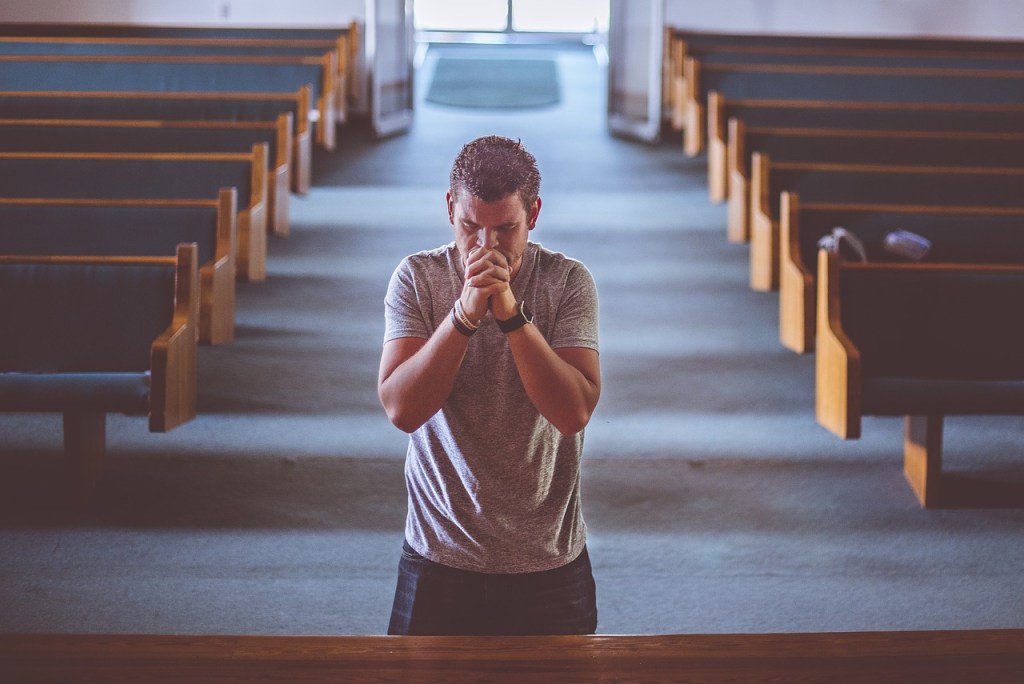
The world says, ‘If you are not making good use of your time, you are useless.’ Jesus says: ‘Come and spend some useless time with me.” If we think about prayer in terms of its usefulness to us–what prayer will do for us, what spiritual benefits we will gain, what insights we will gain, what divine presence we may feel–God cannot easily speak to us. But if we can detach ourselves from the idea of the usefulness of prayer and the results of prayer, we become free to ‘waste’ as precious hour with God in prayer. Gradually, we may find our ‘useless’ time will transform us, and everything around us will be different.
Prayer is being unbusy with God instead of being busy with other things. Prayer is primarily to do nothing useful or productive in the presence of God. To not be useful is to remind myself that if anything important or fruitful happens through prayer, it is God who achieves the result. So when I go into the day, I go with the conviction that God is the one who brings forth fruit i my work, and I do not have to act as though I am in control of things. I have to work hard; I have to do my task; I have to offer my best. But I can let go of the illusion of control and be detached from the result. At the end of each day I can prayerfully say that if something good has happened, God be praised.
Paying Attention to Meaning in Art
“Things mean things.”
That’s what Jeffrey Overstreet‘s high school English teacher taught him about poetry and literature and films and art and he has carried that lesson with him as a movie critic and author and teacher.
Objects and words and images have meaning. Sometimes the creator uses them intentionally to convey specific ideas or truths, and at other times, the meaning is personal to the one who is engaging with the art. The work speaks to us in ways the creator may never have intended, but we get the message nonetheless.
Years ago, I visited an Annie Leibovitz photography exhibit at the High Museum of Art in Atlanta. I only remember one portrait. It’s the one in the White House of members of the Bush Administration’s war time cabinet. Something in that portrait jumped out at me and I couldn’t take my eyes off of it.
It was a band-aid on the thumb of Donald Rumsfeld.

The way his hand is positioned in the portrait told me I was MEANT to see the bandage. Leibovitz seemed to be saying “look at this!”
Here was this huge portrait of some of the most influential and powerful people on the planet at that time and one of them had a boo-boo. The meaning, to me at least, was that these are human beings, just like me. They are fallible and weak and easily injured, just like me.
It was a powerful experience with art and one I hope I never forget.
As a Christian, I believe that Scripture is the only infallible source of authority for faith and practice. I also believe God’s voice can be heard in art and nature and through others. God, the ultimate Creator, speaks through the creations of his image bearers. But we have to be curious and we have to engage and we have to slow down and pay attention. We have to remember that things mean things and that requires something of us, some effort to discover the meaning.
Works of art, whether a novel or painting or a play or anything else, has an impact on the way we see ourselves and the world and maybe even God. As Paul Klee says, “Art does not reproduce what we see; rather, it makes us see.” And I would add that it broadens and deepens and changes what we see and HOW we see.
But we have to pay attention.
In his excellent book, THROUGH A SCREEN DARKLY, Overstreet talks about “the God Room”. That’s what Hollywood people call the room where they meet with the Christian journalists and movie critics. At first it was an insult but those who have been in the God Room with these believers have discovered that they often have the deepest and most profound conversations about art there.
That’s because Christians see the world differently. We are looking for God and truth in what we see on the screen and when we see it, we point it out and ask meaningful questions about it. And in doing so, these Christian film critics have often shown the artists themselves something they didn’t realize was in their own work.
When was the last time you engaged art looking for the voice of God?
Change the way you see.
Don’t Live in the Destination
In our hustle culture we are rarely where we are, we are almost always where we are supposed to be next.
We are having lunch with a colleague but we are thinking about our next meeting.
We are talking with our spouse but we are thinking about the project we need to finish.
Our kids are telling us about their day but we are thinking about the game we are missing on TV.
In her book, IF YOU WANT TO WRITE, author Brenda Ueland calls this living in our destination.
We are not present where we are, we are living where we are supposed to be next. And in doing that, we never experience anything. We never arrive anywhere.
What are we missing? More importantly, WHO are we missing?

A concept I have been thinking a lot about as I write my next book is that love lingers. When we truly love someone, they have our full attention in the time we are with them. We are not in a rush to get to the next thing, we are there, in that time with that person.
I have a friend who is dear to me and we’ve had trouble recently coordinating our schedules to get some time together. One afternoon he had window of time between meetings.
I said no. Not because I didn’t want time with my friend, but because I didn’t want to be rushed. And I told him that. He agreed with me.
If we had met, he would be living in his destination, and I would have been living in his destination too because I would be thinking about how he had to leave soon to get to his next appointment.
It takes discipline to be in the present moment with others, but it’s worth it. If you want to build real fellowship and community. You must linger.
The Institute on Aging conducted a study on the Top 5 Regrets of the Dying and here is how the doctor who conducted the study summarized their findings:
It all comes down to love and relationships in the end. That is all that remains in the final weeks — love and relationships.
The next time you are with someone, anyone, try to be in that moment with them. THAT is your destination, not what’s next, but right there, with them. It will be uncomfortable, and it will take practice, but it will also be worth it.
It’s Not the Catastrophe You Think It Is

Confession time.
I am a chronic catastrophizer.
I RUN quickly to the absolute worse scenarios in my mind, dwell on them, and become convinced that those catastrophic scenarios are the most likely ones, even when they are remote.
Make a mistake at work? Everyone thinks I am incompetent now.
Have a fight with my wife? We’re on our way to a divorce.
Have to start taking blood pressure meds? I am going to die any day now.
Don’t get the feedback I want on a project? I am a failure and everyone hates it.
NONE of these are true. But they FEEL true and my mind and body respond as if they are true.
Then I tear myself to shreds internally until the issue is resolved.
After that comes the feelings of shame as I realize that yet again I have blown something out of proportion.
Not Just What Happened, But What Will Happen
It even impacts events that have not taken place yet.
I have social anxiety because I convince myself that I will do or say something stupid and embarrass myself or my family.
I dread doctor visits, work meetings, social events, ceremonies, dinners out, and travel plans, all because I believe they will be difficult or embarrassing or won’t go well.
I am not paralyzed by this. I go anyway. I do them anyway. But, it’s difficult to enjoy them because I am waiting for disaster to strike.
It’s not fun. And it had become my default mode of thinking for so long that I wasn’t even aware that I was doing it. And I wasn’t aware of what it was doing to me and to the people I care about.
Enter a New Practice
I’ve been working on it. Part of that is writing about it in my journal and here. So you’ll see more of this.
I’ve been trying something recently that has been helpful and that is replacing my negativity bias with a positivity bias.
Negativity bias is the human tendency to register negative events more readily than positive ones and to dwell on those negative events.
It rewires your brain to associate negative emotions with certain people, events, and experiences, and causes you to avoid them or approach them with fear or even anger.
In fact, it can cause you to see ONLY the negative and filter out anything positive.
I’ve been working on creating a positivity bias by bookending my days with positive expectations on one end and grateful, positive reflection on the other.
When I get up in the mornings my first thought is, “Today is going to be a great day. I am grateful to you, Lord.”
That’s like a command for your brain. It starts seeking out the great things in your day that you can be thankful for.
At the end of the day, when I am in bed I rehearse in my mind all the great things that happened that day and give thanks to God for them. This is especially important because this is where the real changes take place in the way you think and approach your days.
I felt like it’s been making a difference, but the real test came yesterday.
Putting it to the Test
Yesterday was my annual physical. Those are important, especially when you’re middle-aged, and as my doctor reviewed my EKG she said I needed to see a cardiologist. “Non-emergent arterial blockage” she called it.
Cue the panic attack.
Only there wasn’t one. And that surprised me.
She said that as long as I got a full work up in the next 3 to 6 months and started taking a baby aspirin I’d be fine and they probably wouldn’t do anything about it but establish a baseline so they can watch it.
And there were other issues too, that I won’t go into here, but it was stuff that would have sent me into an abyss of fear and despair only this time it didn’t. Not at all.
In fact, I walked out of the office feeling thankful to God that these issues had been revealed and that the changes I had been making in my diet and physical activity already had me on the right track and that I could just continue on that path.
That was nice.
I have some minor health challenges to face, positivity bias is NOT living in denial of reality, but the issues I am facing are not the catastrophe I would usually think they are. Instead, I am facing them feeling thankful and determined to make the changes I need to make.
You are NOT God, and That Sets You Free
We are not designed to be sovereign but to be dependent on the one who is.
I love this quote from Alan Noble:
“One of my concerns about contemporary society is that it suffers from a lack of agency…Alain Ehrenberg notes in his book THE WEARINESS OF THE SLEF, that inhibition is one of the symptoms of contemporary depression. He ties it to the burden of being a sovereign self, an overwhelming experience for most people that often leaves them frozen and feeling unable to move in the world.”
The belief that you are completely sovereign over your own life can be a paralytic.
- What if I take the wrong path in life?
- What if I never fulfill my potential?
- What if I just live an ordinary life and never do anything great?
- What if I fail?
- What if I look foolish trying to do something?
- What if my life doesn’t go EXACTLY like I want it to?
The belief that a good, loving, and kind God is sovereign over all things liberates us from the paralysis of self-sovereignty. It sets us free to risk and to advance and to try. And yes, to fail too. Because failure is a part of living. A BIG part of it.

If God is sovereign, then I am free to live without fear.
If God is sovereign, then I am free to take risks.
If God is sovereign, then I do not have to be afraid of whatever trials may come or what their eventual outcome may be.
When we don’t keep God’s sovereignty in mind, we put far too much pressure on ourselves to achieve certain outcomes and it can paralyze us into doing nothing.
A lack of faith in God’s sovereignty can also cause us to procrastinate on things we know we should be doing.
It is arrogant to believe I will always have the time to do what I know I should be doing right now. I don’t control the length of my life. My days are quite literally numbered (Psalm 139:16) and only God knows when they are up.
That fact should create a sense of urgency but without fear.
I am absolutely immortal until my days are done because they are in God’s book and I cannot add even one hour to their length (Luke 12:25-26).
So why worry?
Urgency without fear. We must do what we can. And leave the results with God.
Christians should be some of the boldest risk takers and doers and leaders and creators on the planet. We can risk and do and lead and create without fear, because we know we are not sovereign and that God is.
 Joseph McBee