
Welcome to my first post in a new series, FILMS CHRISTIANS SHOULD WATCH.
I was going to begin with the 1992 movie, THE POWER OF ONE, but when I went back to watch it again I discovered that the streaming version does not have English subtitles. I have extreme hearing loss and even with hearing aids in both ears, I must have subtitles on everything I watch. So, I decided to start with what would have been the second film in this series, COLD SOULS starring a personal favorite actor, Paul Giamatti.

***WARNING: THIS REVIEW CONTAINS SPOILERS***
Though you have not seen him, you love him. Though you do not now see him, you believe in him and rejoice with joy that is inexpressible and filled with glory, obtaining the outcome of your faith, the salvation of your souls. – 1 Peter 1:8-9
In this film, Giamatti plays a fictionalized version of himself. He is an actor having trouble preparing for the title role in Chekhov’s “Uncle Vanya.” He feels like the role is taking him over. A magazine article recommended by his agent puts him in touch with Dr. Flintstein, who specializes in the extraction and exchange of souls. He decides to have his soul extracted and stored because he cannot carry the burden of it anymore.
This dark comedy is surprising in so many ways. The premise is absurd and yet the implications are profound.
When Paul first visits Dr. Flinstein (played by David Strahairn) he is struggling with the idea of removing his soul and what it might do to him. The doctor promises that Paul will be happy if he has his soul extracted and Paul responds, “I don’t need to be happy! I just don’t want to suffer.” And that’s really what it comes down to, to have a soul is to suffer. Or, perhaps it’s more accurate to say that we store suffering in our soul.
The whole exchange between Paul and Flinstein is funny, with several laugh-out-loud moments, including one where the doctor offers Paul a cheaper option by storing his soul in New Jersey. “No! I do not want my soul shipped to New Jersey.” Paul says. “I don’t blame you.” The doctor replies.
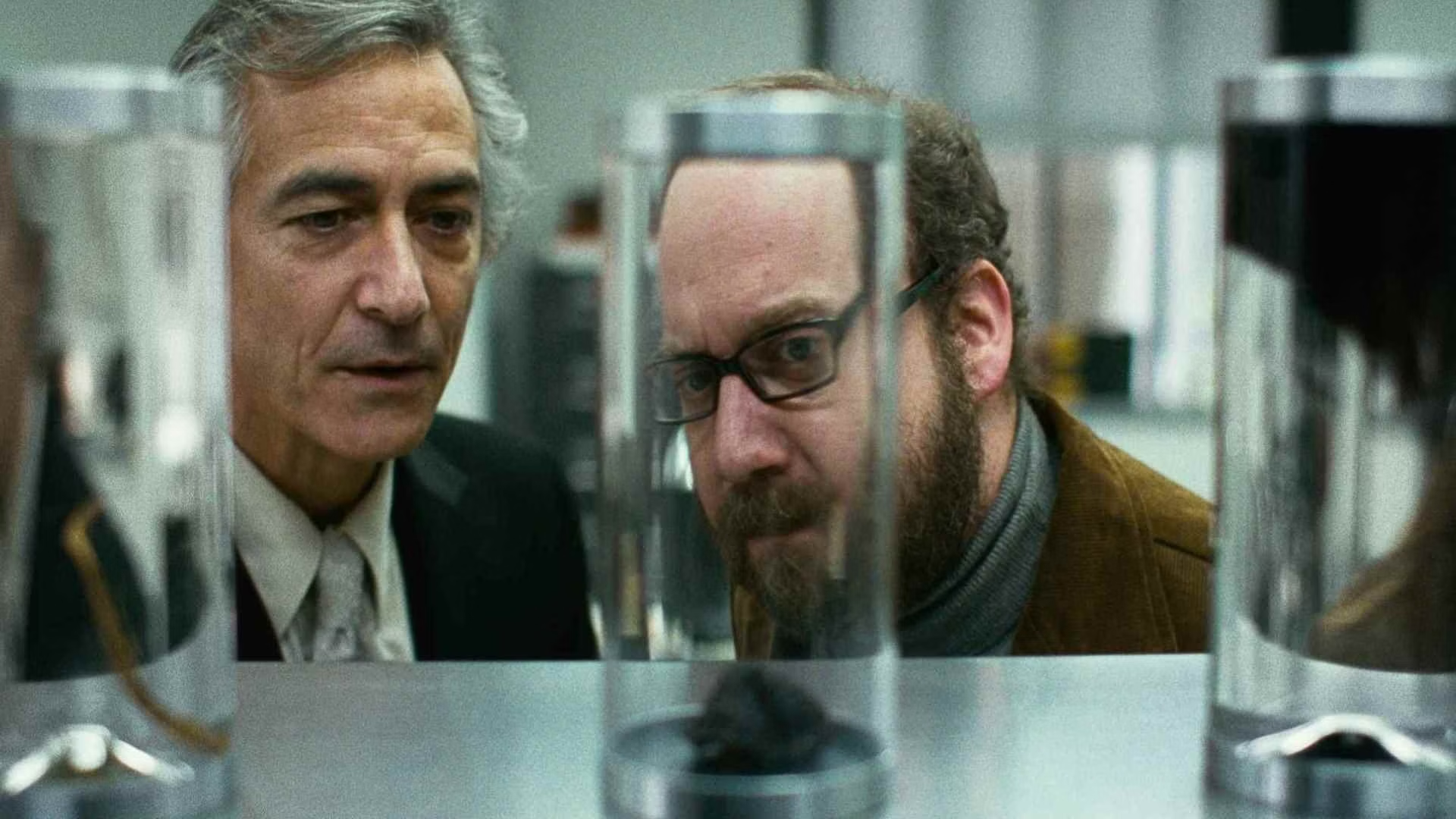
Before the procedure, Flinstein offers him the opportunity to put on a pair of goggles that will allow him to “take a look inside” his own soul. Paul is adamantly opposed to the idea. You can see the fear on his face (Giamatti is a master at nonverbal expressions of incredible depth) but the fear is not around the procedure itself, there is something deeper going on.
This is confirmed when his soul is extracted into a jar and he is afraid to see what it looks like. When he finally looks at it, he is horrified to discover that it has the appearance of chickpea. This is a hilarious scene I won’t spoil for you but the doctor has explained to him that the appearance of our souls can take many different forms. Interestingly he notes that people assume souls would look bright and colorful and dynamic but that most of them are darker, especially gray. He points to one example, a black gelatinous blob, which he says is from a famous actor. “I believe he had a melanoma.” The doctor said. Not his body, his soul, we are led to believe.
The story shifts to another character, Nina (played by Dina Korzun) who is a soul mule for the Russian mafia. She carries people’s souls in her own body to the United States. These souls are from “anonymous donors”, which is a euphemism for poor people who are literally selling their souls for money and their souls are brought to the U.S. where they can be rented by rich people.
When Paul returns to his life with 95% of his soul missing–there is always a fragment left behind–he discovers that he feels nothing. He is not suffering, which was his goal, but he also cannot empathize, he cannot connect with his wife or anyone else, he also cannot act, or live in any meaningful way.
He returns to Flinstein and rents the soul of a Russian poet to help him with his performance in UNCLE VANYA and turns in an intense and wonderful performance the audience loves. But the soul of this poet is too much for him to manage. It turns out that souls carry memories and emotions. By carrying the soul of this poet, he feels what she felt and at the depth she felt it. He sees life through her eyes and he realizes, as he tells Flinstein that “this soul needs a much bigger life than mine…she has a beautiful soul. She should not have done it (given it up).” And in that he realizes that he should not have given up his either.
He decides that he wants his soul back but when he goes to retrieve it from the locker where it is stored, the locker is empty. It turns out that Nina stole Paul’s soul to take back to Russia because the wife of her boss wants the soul of an American actor to help with her acting career. Paul’s is the only one in the database so she takes it back to Russia and tells her mafia boss that it is the soul of Al Pacino.
When Paul finds out, he finally has to admit to his wife what he has done. It’s a beautifully acted scene in which Paul claims that he did a “silly, selfish thing” by giving up his soul and now he must go in search of it with Nina, who is committed to helping him because after carrying his soul to Russia and watching some of his movies feels guilty for stealing his soul and wants to help him get it back.
How interesting that giving up your own soul is a “selfish” thing. Could it be that our souls do not belong to us? That they are not ours to give away or to remove?
When Paul confronts the Russian gangster to get his soul back he discovers, to his horror, that the woman with his soul is in a soap opera. “You’re going to ruin my soul!” He says. And when he finally does, with Nina’s help, extract his soul from the actress, he finds that it is all dried out. The actress was indeed ruining his soul.
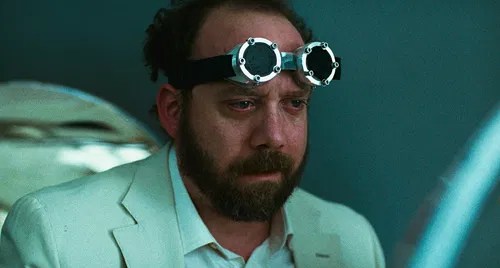
When they try to put his soul back into his body, Nina says that his soul is resisting the return and that he must reconnect with it by looking inside, which is what he has wanted to avoid from the start. When he does, it seems that his worst fears are realized. It looks like his soul is empty.
He soon discovers that it is actually filled with all of the events and people that have made him who he is. There is pain there to be sure. There is darkness and loneliness and suffering. And there is also love and connection and beauty and joy. To regain his soul, he must embrace all the burdens he started out trying to rid himself of.
Why I Recommend It
This film is strange in all the best ways. It asks questions about who we are as human beings without being heavy-handed or by preaching. It just tells an amusing story that is also tender and heavy without being sappy and burdensome.
I find it fascinating that writer/director Sophie Barthes suggests that we do in fact have souls, and that our souls are somehow influenced, changed, built, enriched, and corrupted, by the people, experiences, and choices of our lives. And that without the pain and suffering in our lives, we cannot know joy and happiness nor can we connect with and relate to others.
In one sense, the film suggests that we are the savior of our own souls but then, Paul is helped by Nina who carried his soul within herself for a while. This is a hint that maybe we need something or someone outside of ourselves to save our soul when it is lost.
Certainly, the film celebrates the ways in which our souls are enriched by the people we love and that love us and that connecting with people who have beautiful souls makes our souls more beautiful as well.
It also asks us to accept that suffering is not pointless and that the weight of our suffering is not a burden to rid ourselves of but something to embrace as a force that shapes us.
There is a lot of beauty in this film. And it’s funny and tragic in turns. Giamatti turns in a stellar performance and the script is well written and in many ways, profound. There are themes of faith, redemption, and a belief that our lives have meaning and significance. As a Christian, I see echoes of the faith in this movie.
Reflection and Discussion Questions
If you choose to watch COLD SOULS, here are some questions for reflection and/or discussion.
- What is beautiful about this film? What is true? What is good?
- As Christians, what can we receive in this film? What can we redeem? What must we reject?
- What does this film say about the nature of human beings and how does that compare with what the Scriptures say?
- If you could “take a look inside” your own soul, what do you think you would see? What would you be afraid to see?
- In what ways has God used suffering to shape you? How does it help you connect with others? What can you be thankful for there?
Next week…PERFECT DAYS.

 Joseph McBee